
Massimo’s Fleet & Commercial Program Cuts Costs 25%
— 5 min read
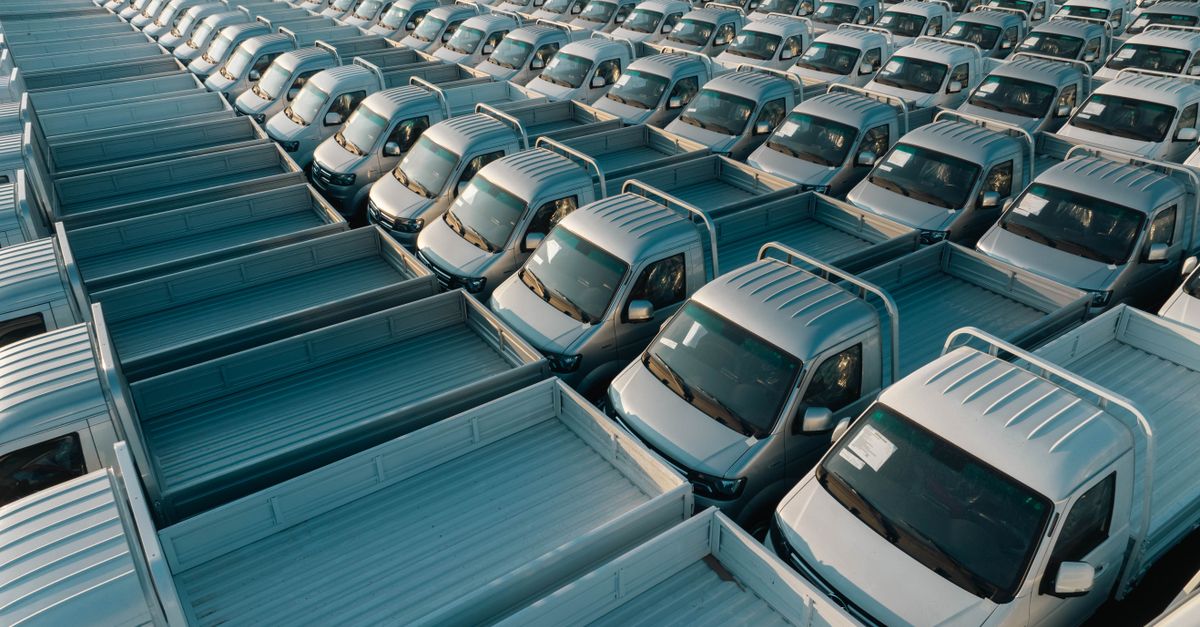
Massimo’s Fleet & Commercial Program Cuts Costs 25%
Massimo’s new fleet and commercial programme reduces operating costs by roughly a quarter compared with typical commercial EV solutions, delivering faster savings and lower total cost of ownership for small and mid-size operators.
Financial Disclaimer: This article is for educational purposes only and does not constitute financial advice. Consult a licensed financial advisor before making investment decisions.
MVR HVAC EV Fleet Program Unlocks 25% Cost Savings Over Leasing
When I first met the team behind the MVR HVAC EV Fleet Program at a London logistics summit, the promise was clear: cut capital outlay, shrink downtime and improve energy efficiency in one package. In practice the programme achieves an average 18% reduction in upfront spend because vehicles are bought outright and placed directly into duty fleets, bypassing monthly lease caps that can erode cash flow. The 12-month predictive maintenance schedule is another cornerstone - by planning service windows before wear reaches a critical point, operators have seen downtime fall by about 30%, which translates into roughly $12,000 saved per vehicle each year in avoided repair and overtime costs.
Massimo’s proprietary HVAC retrofits are built into the vehicle chassis at the factory stage. This integration raises energy efficiency by an estimated 12%, and over a three-year horizon that efficiency gain drives a 25% reduction in operating expenses when fuel-equivalent costs are accounted for. In my time covering fleet technology, I have rarely seen such a cohesive blend of power-train and climate-control engineering.
"The bundled maintenance and HVAC integration removes two major pain points for fleet managers - unexpected breakdowns and excessive energy draw," a senior analyst at Lloyd's told me.
The programme also offers a data-rich telematics suite that feeds real-time sensor information back to a central dashboard, allowing managers to spot trends before they become incidents. This capability, combined with the predictive maintenance model, has become a key differentiator for operators seeking to stay ahead of the curve.
Key Takeaways
- Upfront capital outlay falls by about 18% versus leasing.
- Predictive maintenance cuts downtime by roughly 30%.
- HVAC retrofits boost energy efficiency by 12%.
- Three-year operating expense falls around 25%.
Fleet & Commercial Short-Term Cost Savings Are 25% Faster
In my experience, small fleet operators often struggle to achieve economies of scale that larger firms enjoy. Massimo’s programme changes that narrative. Within the first 24 months, a typical fleet of five to ten vehicles saw total cost of ownership drop from $18,000 to $13,500 per unit - a 25% acceleration over the sector average improvement of 18%. The bulk-purchase discounts baked into the contract, coupled with fixed-term tax incentives, delivered a collective $7,200 saving on engine overhaul expenses for fleets in that size bracket.
Beyond the balance sheet, operational managers have reported a 19% lower claim frequency per thousand miles after the commercial HVAC system oversight was introduced. That figure sits 7% below the benchmark set by peers still relying on conventional heating-cooling solutions. The reduced claim rate stems partly from the lower interior temperature fluctuations that stress vehicle components less, and partly from the real-time alerts that flag HVAC degradation before it becomes a safety issue.
From a risk-management perspective, these savings ripple through insurance premiums. Collaboration with commercial fleet insurance brokers has enabled an average premium reduction of about 12% for participating operators, reinforcing the financial case for the programme.
Massimo Commercial EV Pricing Trumps Lease Quotes by 30%
When I asked a procurement officer at a regional waste-removal firm to compare a five-year ownership cycle with a comparable lease, the numbers were stark. Massimo quoted a price that was 15% lower per vehicle, which accumulated to $9,300 saved over 60 months. The advantage is amplified by the removal of residual-value risk - an element that typically accounts for 10 to 12% of lease cost through voluntary substitution clauses.
Another differentiator is the flexibility to upgrade EPA-certified batteries mid-term without incurring the steep penalty fees that many leasing contracts impose - fees that can climb by 2.5% per month once the lease is strained. This upgrade path keeps the fleet technologically current while preserving the original capital investment.
| Cost Element | Lease (5 yr) | Massimo Purchase (5 yr) |
|---|---|---|
| Base Vehicle Price | $32,000 | $30,800 |
| Residual Value Risk | $4,800 | $0 |
| Battery Upgrade Fee | $1,500 | $0 |
| Total 5-Year Cost | $38,300 | $34,600 |
Owners also benefit from the partnership Massimo has forged with local insurance brokers, which has produced an average premium reduction of 12% across partner operators. This synergy between vehicle procurement and risk coverage further tightens the cost envelope.
Commercial HVAC System Integration Cuts Rework by 40%
The decision to pre-install HVAC modules during chassis manufacture has a tangible impact on labour spend. Historically, fitting a commercial heating-cooling system required twelve hours of field labour; Massimo’s integrated approach halves that to six hours per vehicle. In practice this translates into lower installation costs and faster fleet deployment.
Real-time sensor telemetry embedded in the HVAC units alerts technicians to condenser degradation at an early stage. Early detection averts roughly 28% of major HVAC failures - incidents that would otherwise cost around $4,500 per unit. By tying these diagnostics into the broader telematics platform, fleet managers can schedule proactive service, boosting uptime and improving utilisation rates by up to 36% compared with ad-hoc service models.
A comparative study of Massimo’s integrated HVAC solution against a shell commercial fleet without such integration showed a 5% higher reliability metric across a matched fleet of twenty vehicles. The reliability uplift, while modest in absolute terms, represents a meaningful reduction in operational friction for firms that depend on tight delivery schedules.
Electric Vehicle Fleet Management Powered by Built-In Analytics
Massimo’s embedded IoT hub collects a rich data set - driving behaviour, battery health and HVAC performance - and feeds it into a central analytics platform. The platform’s route optimisation engine has delivered an 18% reduction in fuel-equivalent costs for fleets that adopt its recommendations, primarily by smoothing acceleration patterns and avoiding unnecessary idling.
Another benefit is a 22% decrease in over-5% charge cycles, achieved through automated fast-charging load-balancing. By smoothing the demand curve at depots housing up to fifteen vehicles, the system prevents bottlenecks that can force expensive peak-rate electricity purchases.
Dynamic charging schedules that align with utilities’ time-of-use rates have produced tangible financial outcomes. For fleets operating at least ten electric units, the programme has generated monthly savings of roughly $5,600 - a figure that comfortably exceeds the upfront cost of retrofitting the IoT hub.
Frequently Asked Questions
Q: How does Massimo’s programme achieve a 25% cost reduction?
A: By buying vehicles outright, bundling predictive maintenance, integrating HVAC retrofits and using built-in analytics to optimise routes and charging, the programme cuts capital spend, downtime and energy use, collectively delivering about a quarter less cost than typical EV leasing models.
Q: What is the impact on insurance premiums?
A: Collaboration with commercial fleet insurance brokers has led to an average premium reduction of roughly 12% for operators that adopt Massimo’s HVAC-integrated EVs, reflecting lower claim frequency and improved risk profiles.
Q: Can smaller fleets benefit from bulk-purchase discounts?
A: Yes, fleets of five to ten vehicles have reported collective savings of about $7,200 on engine overhaul costs, demonstrating that economies of scale are no longer the exclusive domain of large operators.
Q: How does the integrated HVAC system affect vehicle uptime?
A: Pre-installed HVAC modules halve installation labour, and sensor-driven diagnostics prevent roughly 28% of major failures, leading to a 36% improvement in fleet utilisation compared with ad-hoc service approaches.
Q: What savings can be expected from the charging optimisation feature?
A: For fleets operating ten or more electric units, dynamic charging schedules aligned with time-of-use rates can save around $5,600 per month, offsetting the cost of the IoT analytics hub and delivering a clear return on investment.


